
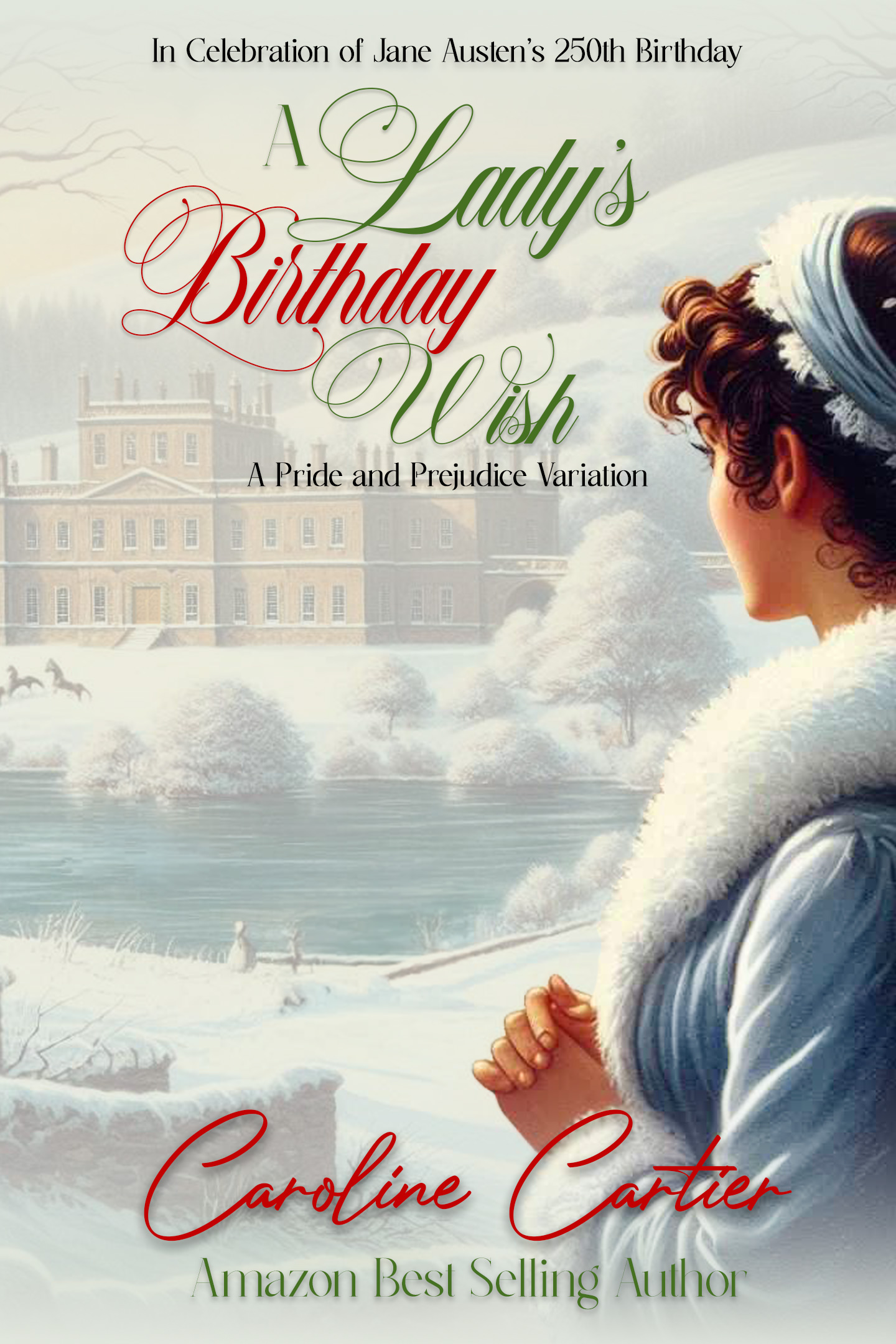
Today we have a guest post by Caroline Cartier, who is here to talk about her new Pride and Prejudice variation, A Lady’s Birthday Wish.
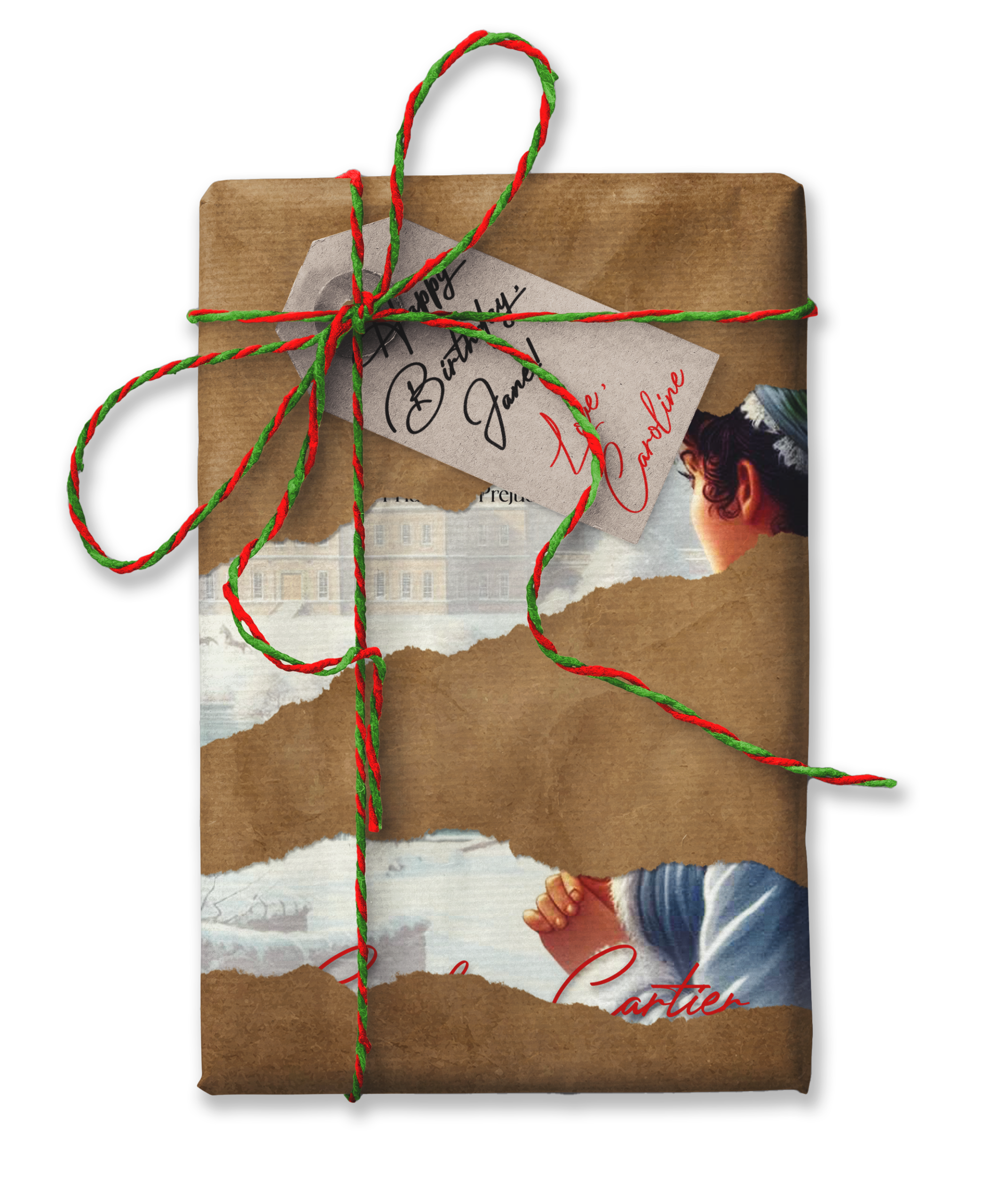
Caroline, in your new book, Jane Austen falls, hits her head, and wakes up on Oakham Mount, resulting in her spending the festive season at Netherfield Park as the guest of Mrs Bingley. We know from Miss Austen’s letters that she paid keen attention to food and dining. What might the festive season have looked like for a guest of Mrs Jane Bingley?
Caroline: Thank you for hosting me, and I hope everyone brought their appetites, for as a guest at Mrs Bingley’s table, Miss Austen would find much to write home about. Miss Austen’s surviving letters mention especially her fondness for family gatherings and for treats of the culinary variety. There were no Christmas trees yet, but plenty of evergreen garlands, candlelight, and merrymaking.
If you were to step into a festive celebration at Longbourn, Netherfield Park, or even the modest parsonage at Hunsford, you would find yourself surrounded by warmth, candlelight, and an impressive number of mince pies. Though Christmas in Jane Austen’s time (the early 19th century) was not yet the grand Victorian affair of trees, crackers, and carols, it was still a cherished season of family, hospitality, and – above all – feasting. Let’s imagine the holiday table through the eyes and appetites of the world of Pride and Prejudice.
In the Georgian era, Christmas was less about expensive displays and gifts, and more about tradition, hospitality, and abundance. Just as we do now, people travelled to visit their kin, families gathered, country houses filled with friends and relations, and the gentry entertained their neighbours with balls, dinners, and card parties.
At Longbourn, Mrs. Bennet would be in a flutter over puddings and poultry. At Pemberley, Mrs. Reynolds and her kitchen staff would oversee an elegant display worthy of Mr Darcy’s rank, blending local produce with imported delicacies from London.
The Christmas Dinner Menu
A Regency Christmas feast was often served in several “removes”, or courses, each one a generous spread of dishes. A typical menu might include:
First Course
We all know of the famous white soup at the start of a Regency meal, but other soups were popular as well, such as onion soup, or if one was very wealthy, turtle soup. A roast of beef would often accompany the first course, accompanied by oysters, root vegetables, and for fine tables, creamed spinach, artichoke, asparagus, or other greens from the hothouses of the wealthy.

The following courses would be numerous and plentiful, including many dishes such as:
- Fish – often sole, salmon, mackerel, and shellfish, including lobster. For the wealthiest tables, sturgeon or turbot.
- Game birds – pheasant, partridge, pigeons, woodcock for those with access to estate hunting grounds. A true rarity was bustard, though the centrepiece of most middle class Christmas tables was goose. Turkey was less common but still served often at the Christmas tables of the very wealthy.
- Raised pies – venison pies, pies made with pigeon and all manner of fowl, and mincemeat pies, which were to be eaten every day of the twelve day festive season for good luck.
- Desserts and sweets – syllabub, trifle, Christmas cake, and all manner of sweet tarts and jellies accompanied each course.
- Plum pudding – the undisputed star of the Christmas table, made weeks in advance with suet, raisins, currants, brandy, and spices. It was boiled in a cloth and ceremoniously brought to the table flaming with brandy. Some families participated in Stir-up Sunday on the last Sunday before Advent. When each member of the family had taken a turn stirring the batter, the cook would stir in a number of charms and a silver sixpence, to be found when the pudding was served.
- Drinks of the season – wassail, a spiced cider or ale, served hot and shared among guests in a great bowl, accompanied by toasts to health and good fortune. Negus – a favourite of Jane Austen herself, made of port wine diluted with hot water, sugar, and lemon. Punch, often rum or brandy based, with citrus, spices, and sometimes tea. Mulled wine – red wine warmed with cinnamon, cloves, and nutmeg.
Families ate, drank, and celebrated with abandon for the entire twelve day feast. Even the most sober of clergymen (perhaps even Mr. Collins, if pressed) might indulge in a modest glass (or twelve) of wassail under Lady Catherine’s watchful eye. For all of the delicacies upon Mrs Bingley’s table, Christmas in Regency England was more than just eating; it was about family and frivolity. Guests might play cards, perform charades, or sing catches around the pianoforte. A ball might follow on New Year’s Eve or Twelfth Night, where mistletoe provided a sanctioned excuse for flirtation.
I hope you all enjoyed this glimpse of an Austen festive table. In A Lady’s Birthday Wish, Jane Austen’s festive season in Meryton features a great deal more than fine dining. In this story of warmth, wit, and welcome, there is plenty of shared laughter and – perhaps – a little romance under the mistletoe.
Leave a Reply