
Welcome to the Author Interview. This time, it features the lovely Svetlana Rodina author of The Archive of Absence: The Letter from the Wolf.
If you’re an author who’d like to take part in the series, email me: debbie@myrandommusings.co.uk
Now over to Svetlana.
- Firstly, tell us a little bit about yourself
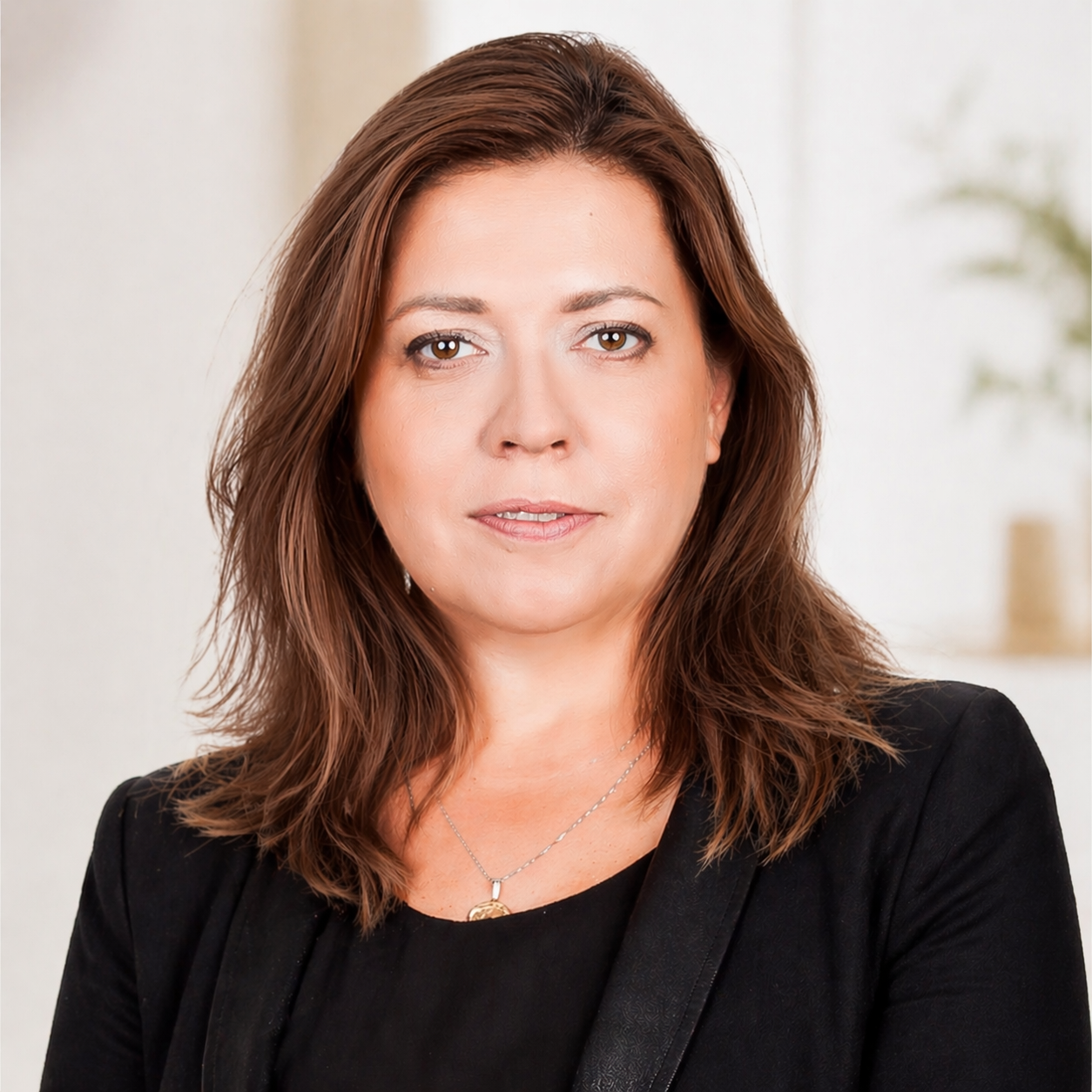
I’m Svetlana Rodina, an independent writer based in Buenos Aires. For many years I worked in education, teaching economics, management and related subjects, and languages and translation have also been an important part of my professional life. Fiction came later, although when I look back, many of the things I write about now were already there: the way people explain themselves, the stories families repeat until nobody quite remembers where they began, and the distance that can appear between what happened and what we decide it meant.
Living in Buenos Aires has probably sharpened that interest. It is a city full of people who have come from somewhere else and built another version of home, often without completely leaving the previous one behind. That coexistence of memory and reinvention fascinates me.
- Tell us a little bit about your books
My books usually begin with something familiar and then move into less comfortable territory. I am interested in women who already have a life behind them, because by that point every new choice has history attached to it.
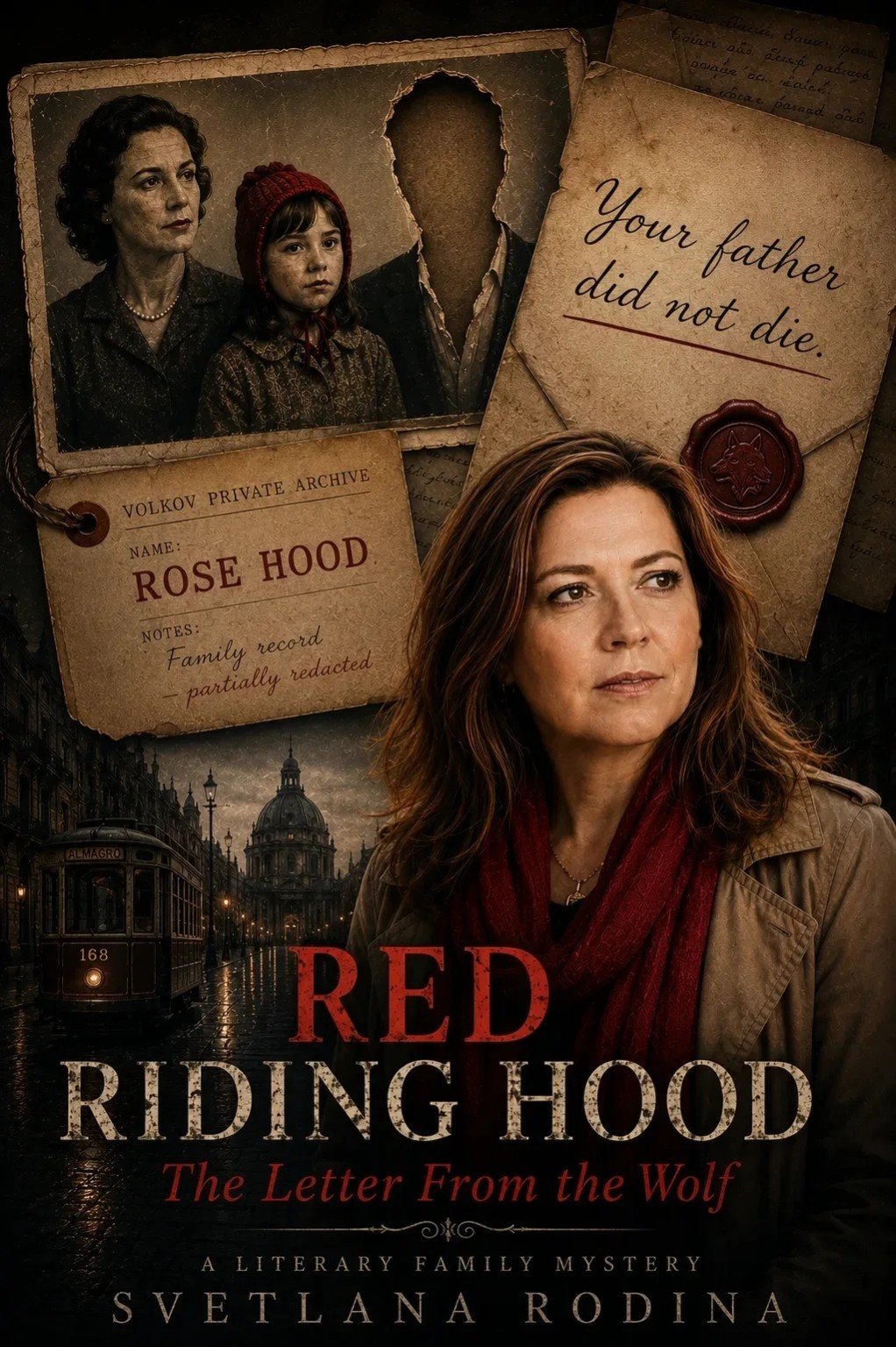
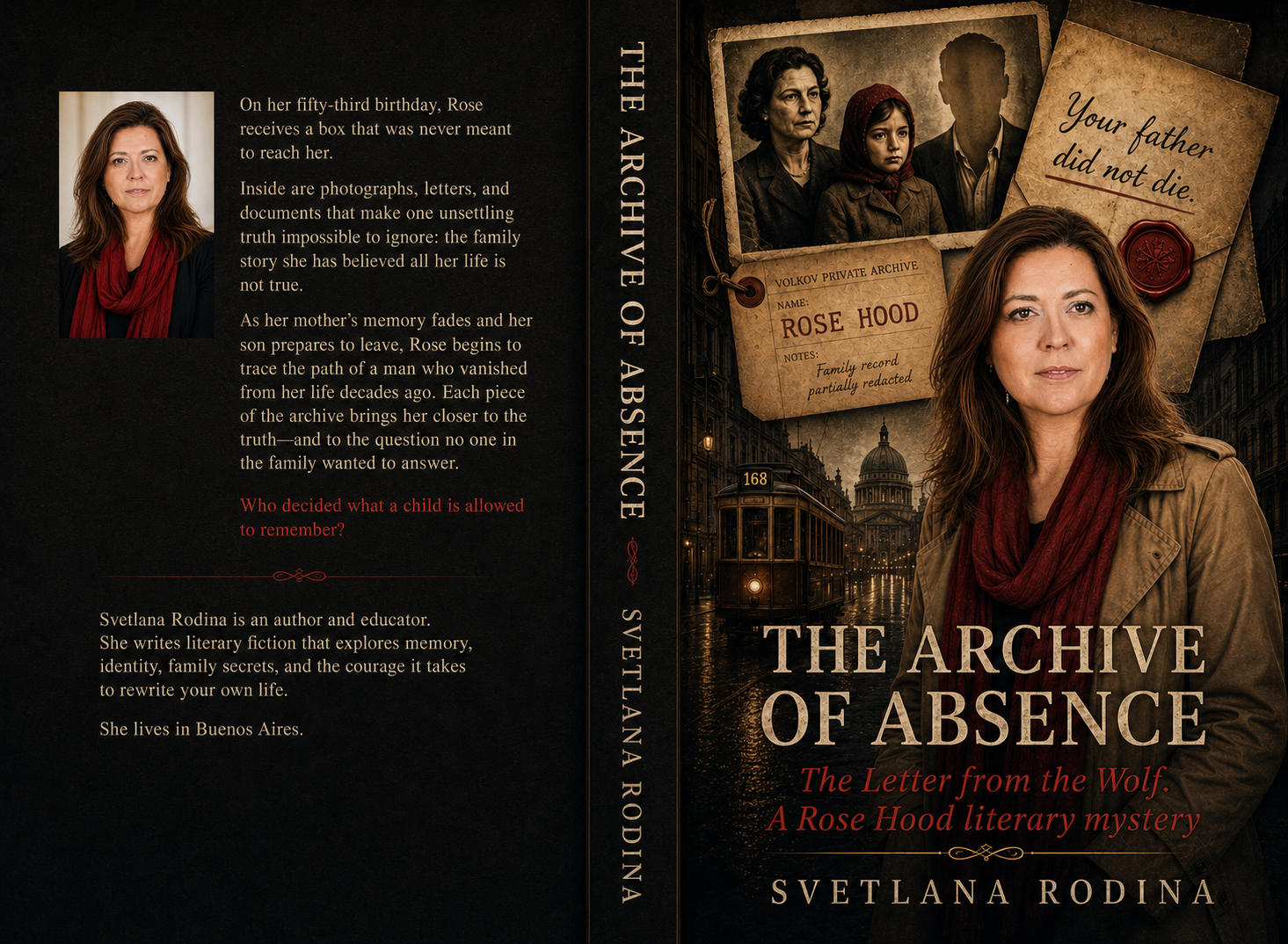
My current English novel, The Archive of Absence: The Letter from the Wolf, originally appeared as Red Riding Hood: The Letter from the Wolf. Rose Hood is fifty-three and living in Buenos Aires when an old family archive begins to contradict what she has believed for decades about her father and her childhood. The mystery grows through photographs, letters, receipts and notes, but what matters most to me is the effect of that discovery on the life she has already built.
The other novels use Cinderella and Sleeping Beauty as starting points rather than templates. I keep the recognisable bones of the old stories, then let contemporary adult life disturb them in ways the originals never had to deal with.
- Where do you find your inspiration for your books?
Inspiration usually comes from something small that does not quite fit. Someone tells a family story differently from the way you remember hearing it before, an old photograph contains a detail nobody ever mentioned, or a person describes themselves as independent while quietly organising their entire life around other people’s needs.
Those ordinary contradictions interest me much more than spectacular events because they are often where character really begins to show. A dramatic confession can tell you what happened, but a tiny inconsistency can tell you how someone has been living with it for years.
- What, for you, is the best thing about being a writer?
The best part is being able to stay with something complicated long enough to give it some shape. Real life rarely explains itself properly, and people often hold several conflicting truths at once without ever resolving them.
Fiction gives me room to look at the same situation from different angles without forcing it into a simple answer. I enjoy that process of discovering that a character can be loving and selfish, honest and selective, strong in one part of life and completely helpless in another.
- And the worst?
The worst part begins when the book is finished and suddenly turns into a small administrative company that nobody warns you about. There is formatting, metadata, distribution, promotion, correspondence, platform rules and the constant discovery that writing a book and helping readers find it require entirely different abilities.
I still find it slightly unfair that a completed manuscript does not develop initiative, introduce itself to readers and arrange its own publicity. Mine have shown no interest in becoming that independent.
- If you could have any super power, what would it be and why?
I would choose the ability to understand another person completely for one minute at a time. Permanent access to everybody’s thoughts sounds less like a super power and more like a fairly serious punishment, but one completely clear minute would be useful.
For that brief period there would be no politeness, self-protection, misunderstanding or carefully edited version of what someone meant. Considering how much of human life is spent wondering what another person was really trying to say several conversations ago, even sixty seconds of clarity could save an extraordinary amount of time.
- Do you have any tips for anyone wanting to write their first book?
I would suggest keeping the stages separate as much as possible. While you are writing the first draft, concentrate on reaching the end rather than trying to make every paragraph perfect. Once the whole book exists, revision becomes a different kind of work, and you can afford to be much more demanding.
Honest feedback also matters. Praise is pleasant, but someone who can tell you exactly where they stopped believing in a character, lost interest in a scene or became confused by the logic of the story is often far more useful.
Most of all, I would not wait for the moment when you finally feel completely prepared to write a book. Readiness has a habit of moving further away whenever you approach it, whereas pages at least give you something concrete to work with.
- Tell us one random fact about you
I pay far too much attention to conversations in cafés, although I rarely remember the actual words afterwards. What stays with me is usually something smaller: the rhythm of an argument, a pause before an answer, the way someone changes their voice when a certain subject appears.
Months later, one of those details may return in a completely different scene with different characters. By then I often no longer remember where it came from, which is probably safer for everyone involved.
- Who is your favourite author?
I find it difficult to choose one because different writers have taught me very different things. Chekhov showed me how much can happen beneath an apparently ordinary conversation and how little explanation a reader sometimes needs. Dostoevsky understood the exhausting, fascinating way people argue with themselves while remaining convinced that somebody else is the problem.
Daphne du Maurier is important to me for another reason. She could create unease through atmosphere, absence and implication without constantly announcing that something terrible was about to happen. I admire that restraint enormously.
- And your favourite book(s)?
Rebecca by Daphne du Maurier is a novel I return to because of its atmosphere and its understanding of how someone who is absent can still dominate every room in the story.
I also love Chekhov’s short fiction, partly because so much remains unresolved without feeling unfinished. The Master and Margarita by Mikhail Bulgakov is another book I can reread at different ages and discover that the novel seems to have changed, although naturally the uncomfortable truth is that the reader has changed instead.
- What book are you reading right now?
At the moment I am rereading The Master and Margarita. I first encountered it at a very different stage of life, so returning to it now is almost like meeting a familiar person after many years and discovering that the conversation has shifted.
That is one of the pleasures of rereading. The words remain where they were, but your attention moves to different characters, different details and different questions depending on what has happened to you in the meantime.
- Where is your favourite place to write?
I usually write at home in Almagro, Buenos Aires, where I have my computer, notes, tea and everything I need within reach. It is not a particularly romantic arrangement, but I have never needed writing to look picturesque in order for it to work.
I also like cafés when I have been alone with the same page for too long. Being around other people changes my attention slightly. I notice gestures, voices, fragments of conversation and the ordinary theatre of people trying to get through their day.
- Do you prefer to write in silence or do you have a writing soundtrack?
I prefer relative silence because music can influence the emotional tone of a scene more than I want it to. If I am writing dialogue, I need to hear the rhythm of the characters rather than have another rhythm imposed on them from outside.
Absolute silence is rarely available in a large city anyway, so I am used to traffic, neighbours, pipes, doors and the occasional unexplained noise that Buenos Aires contributes to the writing process without being invited.
- What can we expect from you next?
I am continuing with this loose series of adult fairy-tale reinterpretations. The next books move into Cinderella and Sleeping Beauty territory, although each one develops in a very different direction.
What interests me now is less the fairy-tale reference itself and more how far the original structure can be stretched before it becomes something completely new. The familiar story is still there somewhere underneath, but I want the reader to recognise it gradually rather than feel that the book is following a predetermined pattern.
- Anything else you’d like to share with us?
One of the things I care about most is writing women in midlife as people whose stories are still developing rather than as characters who exist mainly to remember what happened when they were younger.
There is a persistent cultural idea that a woman’s decisive experiences belong to youth, while later life is somehow an epilogue. I find the opposite much more interesting. By fifty, a decision carries the weight of everything that came before it: the people you have loved, the mistakes you understand differently now, the responsibilities you accepted and the versions of yourself you have already outgrown.
For fiction, that gives a writer considerably more material to work with, not less.
- Where can we find you?
My books are available through Amazon and Payhip, and I also share updates about my writing and current projects on Instagram and Facebook.
Leave a Reply